
When a quick fix becomes a personal liability WHS Prosecution
When a quick fix becomes a personal liability WHS prosecution
When work changes, your Risk Assessment should too
Two workers have been fined a total of $21,000 following the collapse of a cantilever storage racking system at a commercial premises in Eagle Farm, Queensland. The case serves as a reminder that individual workers, supervisors and managers can face personal prosecution where their actions create serious workplace safety risks.
What happened?
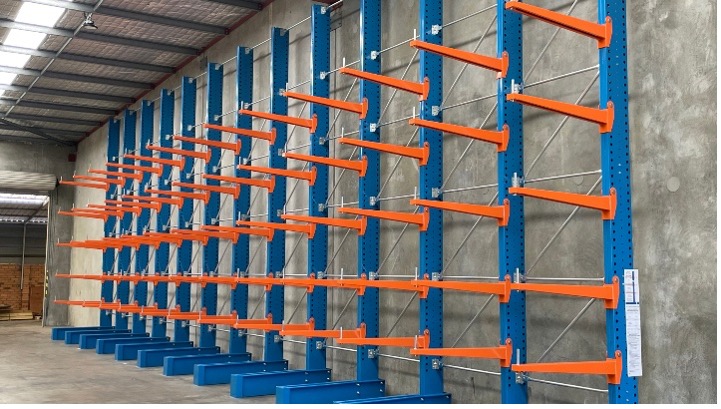
The incident occurred after a company installed a cantilever racking system that was found to be approximately 100–150mm out of position. Rather than dismantling and reinstalling the structure, the company director and supervising worker decided to reposition the fully assembled rack using an elevated work platform (EWP) and a tow strap.
During the manoeuvre, the racking system collapsed towards the EWP, crushing the basket and trapping the supervisor inside. Emergency services were required to free the worker, who suffered bruising and abrasions and was hospitalised overnight.
Breaches
The Brisbane Magistrates Court found both individuals had breached their duties under section 28(b) of the Work Health and Safety Act 2011 (Qld), which requires workers to take reasonable care that their actions or omissions do not adversely affect the health and safety of others.
The court determined that their actions exposed a person to the risk of death or serious injury, resulting in a breach of section 32 of the Act.
Key Court Findings
Magistrate Kelly described the workers' conduct as “self-evidently dangerous”, noting that the decision to move the racking system without dismantling it created a foreseeable and significant safety risk.
The court reinforced that:
WHS obligations apply to individual workers, supervisors and directors, not just businesses.
Informal fixes or shortcuts can expose workers to catastrophic risks.
Decisions made on-site must be supported by appropriate risk assessment and safe work methods.
A task that appears simple can become high-risk when engineering controls and manufacturer specifications are ignored.
Penalties
Company Director - $12’000 fine, $865 costs plus their own defence costs
Supervisor - $9’000 fine, $865 costs plus their own defence costs *reduced fine in consideration of abrasions and overnight hospital stay.
While both workers were convicted, the court did not record convictions. The penalties were reduced by factors including:
Early guilty pleas.
Cooperation with investigators.
Lack of prior criminal history.
Personal financial circumstances.
The supervisor's injuries and overnight hospitalisation were also considered during sentencing.
Key Lessons for Employers and Workers
Never attempt to move, modify or reposition large storage systems without a documented engineering assessment and safe method of work.
Shortcuts taken to save time or costs can lead to personal liability and prosecution.
Supervisors and directors can be prosecuted where they participate in unsafe decisions.
Risk assessments should be reviewed whenever work deviates from the original installation or project plan.
Workers have individual WHS duties and can face significant fines where their actions expose others to serious harm.
Deeper Learning: Risk Assessment Failures
One of the most significant aspects of this prosecution was not the collapse itself, but the apparent failure to adequately assess the risks before changing the planned work method.
After identifying that the racking system was installed out of position, the workers departed from the original installation process and developed an improvised method to reposition the structure using an elevated work platform (EWP) and tow strap. The court considered this approach to be "self-evidently dangerous", highlighting that the risks should have been apparent before the task commenced.
Where the Risk Assessment Appears to Have Failed
1. Failure to reassess when the scope of work changed
Installing a racking system and relocating a fully assembled racking system are fundamentally different tasks requiring different controls and competencies.
A key WHS principle is that when work changes, the risk assessment must also change. Once the workers decided not to dismantle the structure and instead drag it into position, a new hazard was introduced that should have triggered a fresh risk assessment.
Lesson: Any deviation from the original work plan should prompt a formal review of hazards, controls and safe work procedures.
2. Failure to identify structural instability hazards
Cantilever racking systems are engineered structures designed to carry significant loads in a particular configuration. Dragging such a structure laterally can introduce forces that were never considered in its design.
The decision to move the assembled rack appears to have overlooked:
The stability of the structure during movement.
Potential deformation of the racking.
The likelihood of collapse.
The consequences of collapse on nearby workers and equipment.
The collapse demonstrates that the risk of catastrophic failure was either not identified or not adequately considered.
3. Failure to consider the 'What If?' scenario
A fundamental component of effective risk assessment is asking:
"What happens if this goes wrong?"
Had this question been properly explored, several foreseeable outcomes may have been identified:
The tow strap could fail.
The racking could become unstable.
The structure could collapse.
The EWP could be struck or crushed.
Workers could be seriously injured or killed.
The court specifically noted that the conduct exposed a person to a risk of death or serious injury, despite the actual injuries being relatively minor.
4. Failure to establish exclusion zones
The supervisor was positioned in the EWP basket within the collapse zone of the racking system while the movement was taking place.
A robust risk assessment should have identified workers' exposure to the line of fire and established:
Exclusion zones.
Safe stand-off distances.
Alternative methods that would eliminate worker exposure.
Instead, the worker remained directly in the danger zone and became trapped when the structure collapsed.
5. Failure to seek engineering or specialist advice
The installation error involved a large engineered storage structure. Before attempting a non-standard relocation, consideration should have been given to:
Manufacturer guidance.
Engineering advice.
Appropriate lifting and relocation methods.
Structural integrity during movement.
This case highlights a common risk assessment failure: assuming experience and judgement can replace engineering controls and specialist input.
Key Takeaway for Readers
The most important lesson from this prosecution is that the unsafe act was preceded by a poor risk assessment process. The workplace problem was relatively minor—a racking system installed slightly out of position - but the chosen solution introduced a far greater hazard.
The incident demonstrates how many serious workplace events occur:
A defect or problem is discovered.
Workers develop a quick fix to save time and effort.
Formal risk assessment is bypassed.
New hazards are not adequately identified.
A high-potential incident occurs.
For all workers, the case is a powerful reminder that when work changes, stop, reassess the risks, and ensure the proposed solution does not create hazards greater than the original problem. The court's focus on the risk of fatal or serious injury—not merely the injuries that occurred—reinforces that risk-based decision-making remains at the heart of WHS compliance
Source [owhsp.qld.gov.au]
If this case has highlighted gaps in how your workplace approaches WHS, risk assessment or practical safety decision-making, BLMC’s membership options are designed to provide ongoing support beyond one-off training.
Explore our membership options to access practical resources, guidance and learning designed to help regional workplaces build safer, healthier and more resilient teams.
View the BLMC membership options here.